


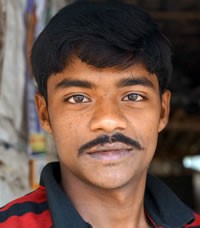

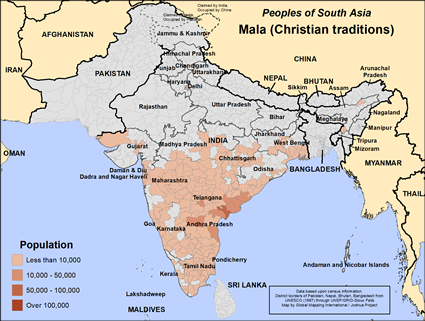
The Male people of India are a small ethnic community found primarily in parts of southern India, particularly in coastal and inland regions where trade routes historically encouraged cultural exchange. They speak a regional form of Malayalam, reflecting close ties to the broader linguistic and cultural patterns of Kerala. Their historical roots are often linked to local caste and occupational identities, shaped over generations by agriculture, small-scale trade, and service-oriented labor.
Christian influences among the Male emerged through contact with long-established church traditions in southern India. Over time, a portion of the community adopted Christian practices, often through interaction with existing Christian groups in the region rather than through isolated missionary encounters. As a result, their identity today reflects both their ethnic heritage and their connection to historic Christian expressions in India.
Daily life among the Male tends to center on family and community. Extended families often live near one another, maintaining strong kinship bonds and shared responsibilities. Elders are respected, and decisions about marriage, work, and property frequently involve the wider family network.
Livelihoods vary, but many Male people are involved in agriculture, working in rice fields, coconut groves, or small garden plots. Others find employment in fishing, local trade, or skilled labor. In more urban settings, some work in service industries or small businesses. Economic life is often modest, with income tied to seasonal patterns or local demand.
Food habits mirror the broader cuisine of southern India. Meals commonly include rice, lentils, vegetables, and coconut-based dishes, often flavored with spices such as curry leaves, mustard seeds, and chilies. Fish is a regular part of the diet in coastal communities.
Festivals provide moments of joy and communal identity. Christian Male families celebrate church feasts, Christmas, and Easter, often incorporating local customs such as shared meals and community gatherings. Recreational activities may include storytelling, traditional music, and informal games, as well as participation in community events organized by churches or local groups.
Among the Male, those identified with Christian traditions are mostly affiliated with historic church bodies common to southern India. However, their faith expression is often shaped by a blending of influences. While they identify as Christians and may participate in church life, elements of older religious worldviews can still persist.
Some continue to hold beliefs about spiritual forces, ancestral influence, and unseen powers that affect daily life. In times of illness, hardship, or uncertainty, individuals may seek help not only through prayer but also through traditional practices aimed at appeasing or resisting these forces. This reflects a worldview in which the spirit world remains active and significant.
As a result, faith in Jesus Christ as Savior and Lord may not always be fully understood or consistently emphasized. Instead, Christian identity can coexist with a reliance on rituals, intermediaries, or customary observances that do not originate from biblical teaching. The mixture of formal Christian doctrine with traditional spiritual concerns creates a setting where spiritual clarity is still developing.
The Male people face a range of practical challenges that affect daily life. Access to consistent healthcare can be limited, particularly in rural areas where medical facilities are distant or understaffed. Preventable illnesses and treatable conditions can become serious due to delays in care.
Educational opportunities, especially beyond primary levels, are not always readily available. Young people may leave school early to support their families, limiting long-term economic prospects. Greater access to quality schooling and vocational training would strengthen their future stability.
Clean water and sanitation remain ongoing concerns in some communities. Improved infrastructure in these areas would significantly enhance health and quality of life. In addition, economic opportunities that provide steady income—rather than seasonal or uncertain work—would help reduce financial vulnerability.
Pray that Male believers would grow in a clear and confident understanding of salvation through Jesus Christ alone.
Ask the Lord to strengthen local churches so they can address spiritual confusion and faithfully disciple their members.
Pray that Christians among the Male would become a vibrant witness, sharing the gospel with neighboring communities that need hope that only Jesus can offer.
References
Scripture Prayers for the Mala (Christian traditions) in India.
| Profile Source: Joshua Project |



